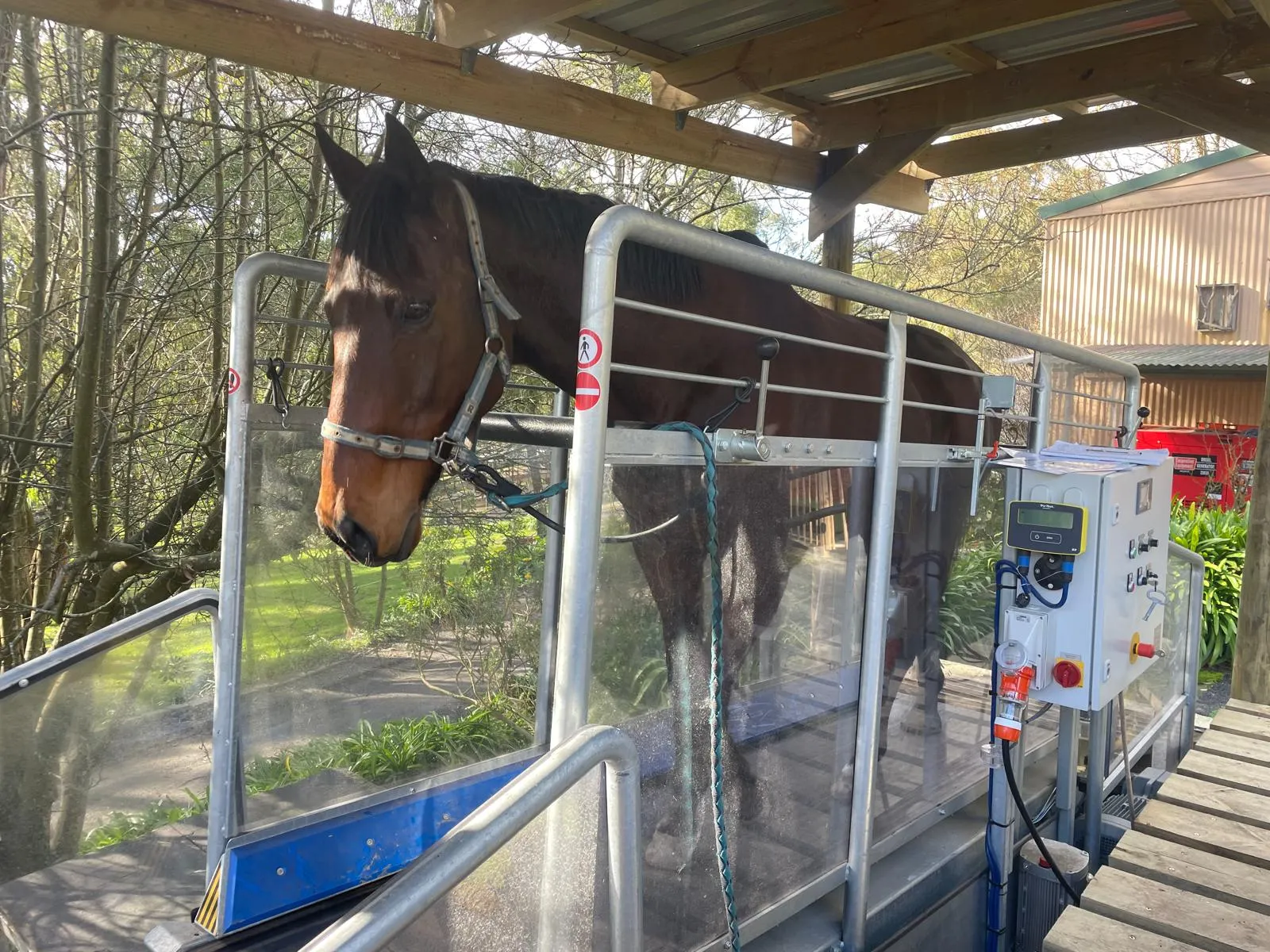
The Treadmill:
Quietly Transforming Toplines
The Treadmill: Quietly Transforming Toplines
May 13, 2026
Why controlled walking and incline work are changing the way we develop stronger, sounder horses
There’s something incredibly satisfying about watching a horse begin to change shape for the better.
Not through force.
Not through gadgets.
Not through endless drilling under saddle.
But through correct, consistent strengthening work that allows the horse to develop naturally, safely and progressively.
That’s exactly why treadmill conditioning has become such an important part of our horse training, rehabilitation and performance management.
For many people, the horse treadmill still seems like a “luxury” piece of equipment — something only elite racing or performance stables would use. But the reality is, when used correctly, the treadmill is one of the most effective tools we have for improving topline development, strength, balance and stability in horses of all ages, breeds and disciplines.
And the beauty of it is this:
We can now create the perfect environment for each individual horse to develop the exact strengthening patterns they need.
No two horses move the same. No two horses carry themselves the same. No two horses require the same program. The treadmill allows us to respect that individuality in a way that traditional conditioning methods often cannot.
What Do We Mean by “Topline”?
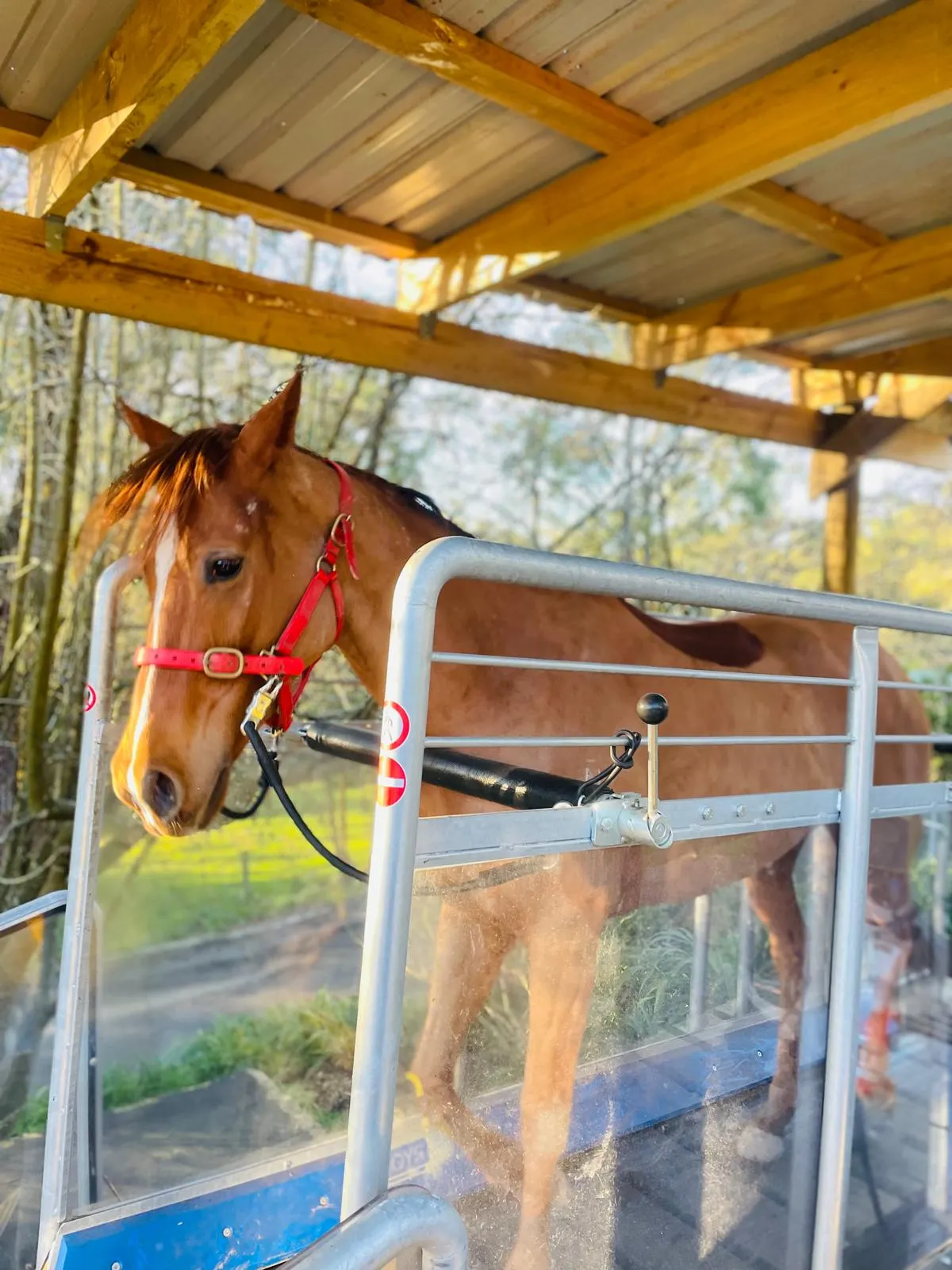
When horse people talk about improving topline, they often think purely about muscle over the back. But true topline development is much bigger than that.
A quality topline includes:
* Strength through the neck
* Stability through the thoracic sling
* Correct muscle over the back
* Engagement through the core
* Strength and push from behind
* Symmetry from left to right
* Postural control and balance
A horse with a weak topline often struggles with:
* Carrying themselves correctly
* Saddle fit changes
* Soundness issues
* Fatigue
* Poor posture
* Hollow movement
* Difficulty engaging the hindquarters
* Inconsistent performance
And importantly — many horses aren’t weak because they’re lazy.
They’re weak because they physically haven’t developed the strength to carry themselves properly yet.
That’s where controlled treadmill work can become a complete game changer.
Why the Treadmill Works So Well
The biggest advantage of treadmill work is control.
When horses are ridden or worked in open spaces, there are countless variables:
* Speed changes
* Surface inconsistencies
* Rider balance
* Corners and turning
* Environmental distractions
* Irregular pacing
On the treadmill, we remove much of that inconsistency and create a highly controlled strengthening environment.
We can adjust:
* Speed
* Incline
* Duration
* Frequency
* Stride pattern
* Intensity
All according to the individual horse standing in front of us.
That individual approach is everything.
A young Warmblood developing balance requires a completely different program to an older Thoroughbred in rehabilitation. A pony returning from injury needs different loading patterns to a fit eventer building strength for competition season.
The treadmill allows us to cater specifically to:
* Length of stride
* Length of leg
* Breed type
* Fitness level
* Age
* Current muscle development
* Rehabilitation status
* Symmetry and balance
* Confidence and coordination
And then — most importantly — we continue adjusting as the horse improves.
Walking: The Most Underrated Gait in Horse Training
One of the biggest misconceptions in the horse world is that harder work equals better fitness.
In reality, quality walking work is one of the most powerful strengthening tools available when done correctly.
Slow, controlled walking allows horses to:
* Activate stabilising muscles
* Develop postural strength
* Improve coordination
* Increase core engagement
* Build endurance safely
* Learn better movement patterns
Unlike faster gaits, walking gives the horse time to organise their body.
That matters enormously when we’re trying to improve topline and overall posture.
On the treadmill, the horse cannot rush, fall onto the forehand or avoid the work quite as easily. Instead, they begin to consistently activate muscles that are often underdeveloped during regular ridden work.
Over time, this creates:
* Better posture
* Improved self-carriage
* Increased muscle tone
* Greater symmetry
* Stronger hindquarter engagement
* Improved stability through the back
And importantly, this strengthening happens without the added weight of a rider.
For horses returning from injury or struggling with weakness, that reduced load can make all the difference.
Incline Work: Building Strength Without Concussion
Once horses begin developing better balance and strength on the flat, incline work becomes incredibly valuable.
Walking uphill naturally encourages horses to:
* Engage the hindquarters
* Lift through the shoulder
* Activate the abdominal muscles
* Push more evenly from behind
* Develop greater spinal stability
But again — the key is progression.
Too much incline too early simply creates tension, fatigue or compensatory movement patterns.
That’s why careful observation matters so much.
We are constantly watching:
* How the horse steps underneath themselves
* Whether they remain symmetrical
* Their breathing and fatigue levels
* Posture changes
* Any signs of compensation
* Mental relaxation
* Rhythm and stride consistency
Every single adjustment is based on what the horse is physically ready for.
As horses become:
* Stronger
* More symmetrical
* More coordinated
* More balanced
…we can gradually increase the elevation to continue developing strength safely and progressively.
That gradual progression is where the magic happens.
Watching Every Step Matters
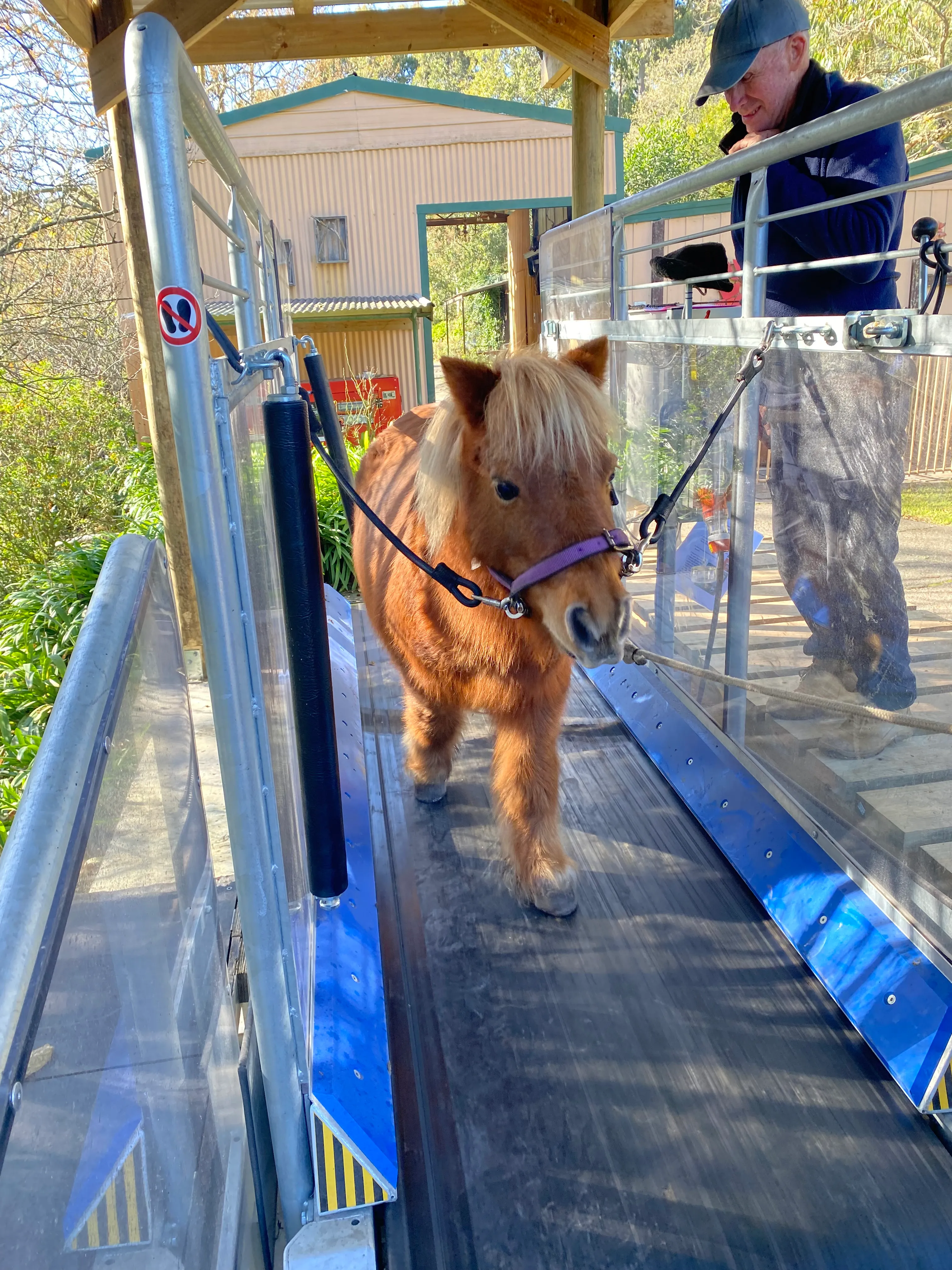
One of the most important parts of effective treadmill conditioning is supervision.
This is not a “set and forget” exercise machine.
Quality treadmill work is completely hands-on.
We are watching every step the horse takes.
Because horses tell us constantly what they need — if we know how to look.
Sometimes a horse may:
* Fatigue earlier on one rein
* Drift slightly through the shoulder
* Shorten one stride
* Lose rhythm
* Hollow through the back
* Lean on the forehand
These small details matter enormously.
They help identify:
* Weakness patterns
* Compensation habits
* Areas needing support
* Fitness limitations
* Developing symmetry improvements
And they guide how we adjust the program moving forward.
That may mean:
* Slowing the speed
* Reducing incline
* Shortening sessions
* Increasing recovery
* Altering frequency
* Progressing more gradually
The horse always dictates the program — not the other way around.
Rehabilitation Benefits
Treadmill conditioning has become increasingly valuable in rehabilitation programs because of the ability to carefully control loading.
For horses returning from:
* Tendon injuries
* Ligament injuries
* Kissing spine recovery
* Muscle weakness
* Post-operative rehabilitation
* General deconditioning
…the treadmill offers controlled, repeatable movement patterns in a safer environment.
Rather than unpredictable paddock movement or inconsistent ridden work, we can carefully reintroduce exercise with precision.
The gradual nature of treadmill conditioning allows tissues to strengthen progressively while minimising unnecessary concussion or overload.
And mentally, many horses thrive on the consistency and routine.
Confidence Through Strength
One of the lesser-discussed benefits of proper conditioning is confidence.
Horses that are physically weak often become mentally uncertain.
When horses struggle to balance themselves or stabilise their bodies, they can present as:
* Anxious
* Reactive
* Resistant
* Lazy
* Uncooperative
* Tight through the back
* Reluctant to go forward
But often, those behaviours improve dramatically once the horse becomes physically stronger.
Strength creates stability.
Stability creates confidence.
As horses develop better balance and posture, many become:
* More relaxed
* More willing
* More consistent
* Easier to ride
* More confident in their movement
This is why good conditioning should never simply focus on “fitness”.
It should focus on functional strength and quality movement.
Every Horse Is Different
Perhaps the most important thing treadmill work teaches us is that there is no universal formula for conditioning horses.
What works beautifully for one horse may completely overwhelm another.
A tall horse with a long stride will require very different speed settings to a compact horse with naturally quick movement. An older horse may need slower progression than a young, naturally athletic horse.
Breed, conformation, age, injury history, temperament and fitness all matter.
That’s why the ability to continually adjust the program is so powerful.
As horses improve, the program evolves with them.
We can:
* Increase incline gradually
* Alter session duration
* Refine speed
* Improve conditioning intensity
* Build greater endurance
* Encourage improved symmetry
All while keeping the horse comfortable, confident and developing correctly.
The Future of Horse Conditioning
The horse industry is slowly shifting away from the mindset that horses simply need to be worked harder.
Instead, there is growing recognition that horses need to be developed smarter.
The treadmill is helping bridge that gap.
Not because it replaces ridden work.
Not because it is a shortcut.
But because it gives us another incredibly valuable tool to help horses:
* Move better
* Carry themselves better
* Develop stronger toplines
* Improve symmetry
* Build stability
* Stay sounder for longer
At the end of the day, great conditioning is about creating stronger, happier, more capable horses.