
The Importance of the Rider’s Leg:
Creating Energy, Confidence and True Connection
The Importance of the Rider’s Leg: Creating Energy, Confidence and True Connection
Feb 17, 2026
If there is one aid that quietly determines the success or failure of your ride, it’s your leg.
- Not your hands.
- Not your seat in isolation.
- Not your fancy bridle or perfectly fitted saddle.
Your leg.
In general horse riding and dressage training, the rider’s leg is the primary driving aid. It creates the energy, the forward desire, the impulsion that allows everything else to function. Without it, you’re simply steering a body with no engine. With it, you have a horse that feels alive underneath you — confident, responsive and genuinely with you.
Let’s talk about why the rider’s leg is so important, how “in front of the leg” changes depending on the horse’s age and training level and why learning to use leg more than hand is one of the greatest educational shifts a rider will ever make.
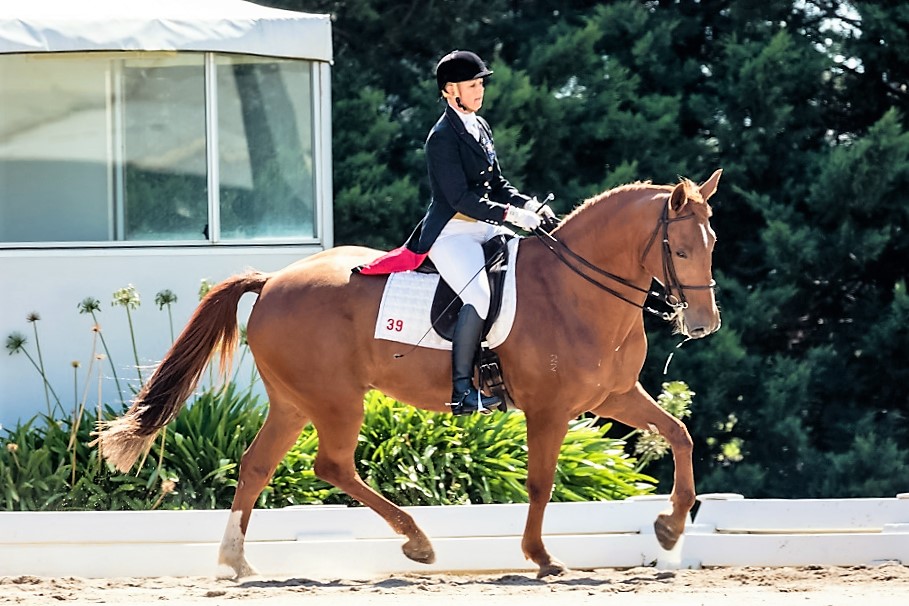
What Does “In Front of the Leg” Actually Mean?
“In front of the leg” is one of the most overused phrases in equestrian training, yet it’s often misunderstood.
A horse that is in front of the leg:
* Reacts promptly to a light aid
* Maintains forward energy without nagging
* Carries itself in balance
* Feels like it wants to go somewhere
It doesn’t mean fast. It doesn’t mean running. It doesn’t mean tense.
It means the horse is attentive and responsive to the rider’s leg aid and that the energy is flowing forward through the body.
From an SEO point of view, if you’re searching terms like impulsion in dressage, how to get a horse in front of the leg, or improving responsiveness in horses, they all come back to the same principle:
The leg creates forward intention.
But here’s where it gets interesting — the degree of being in front of the leg must match the horse’s age, temperament and level of training.
Young Horses: When the Leg is Safety
With young horses, being in front of the leg is not about performance. It’s about safety.
A young horse that is not confidently in front of the leg can very quickly become a horse that dictates the ride.
They might:
* Spook and spin
* Drop behind the leg and become sticky
* Nap towards the gate
* Suck back and then explode forward
* Lock onto something and ignore the rider
When a rider doesn’t have true forward responsiveness, the horse can decide what is going to happen in any given situation.
That’s where the danger lies.
If a young horse feels unsure and the rider is passive with the leg, the horse fills the vacuum.
Horses are masters of survival. If they don’t feel confident direction, they make their own decisions.
This is why correct early horse education must prioritise forwardness from the leg. Not rushing. Not chasing. But a clear, confident understanding that:
**When the rider applies the leg, we go forward.**
For riders learning on young horses, this can be confronting. You suddenly realise that you cannot rely on the hand to control the situation. If you pull when the horse backs off, you often create more tension. If you kick constantly, you dull the response.
The education lies in learning timing.
*Apply the leg.
*Expect a reaction.
*Reward the reaction.
*Then soften.
That cycle builds confidence in both horse and rider.
Educating the Rider: Leg Before Hand
For many riders, especially those who have ridden school horses or older mounts, the instinct is to ride from the hand first.
The horse slows? Use the rein.
The horse lifts its head? Use the rein.
The horse drifts? Use the rein.
But correct classical riding teaches us something very different:
**Ride from leg to hand. Not hand to leg.**
This is where the principle becomes essential:
“Leg without hand and hand without leg.”
What does that actually mean?
* When you apply the leg to create energy, your hand must allow the energy to go somewhere.
* When you use your hand to rebalance, your leg must not be driving at the same time.
If you drive with the leg and block with the hand simultaneously, you trap the horse’s energy. That trapped energy turns into tension, resistance or dullness.
If you use the rein without energy, you kill the engine.
Learning to separate these aids is a real education. It requires feel. Timing. Discipline.
For riders in training, this is often the breakthrough moment. When they realise the horse doesn’t need more rein — it needs more leg and clearer intention.
That shift changes everything.
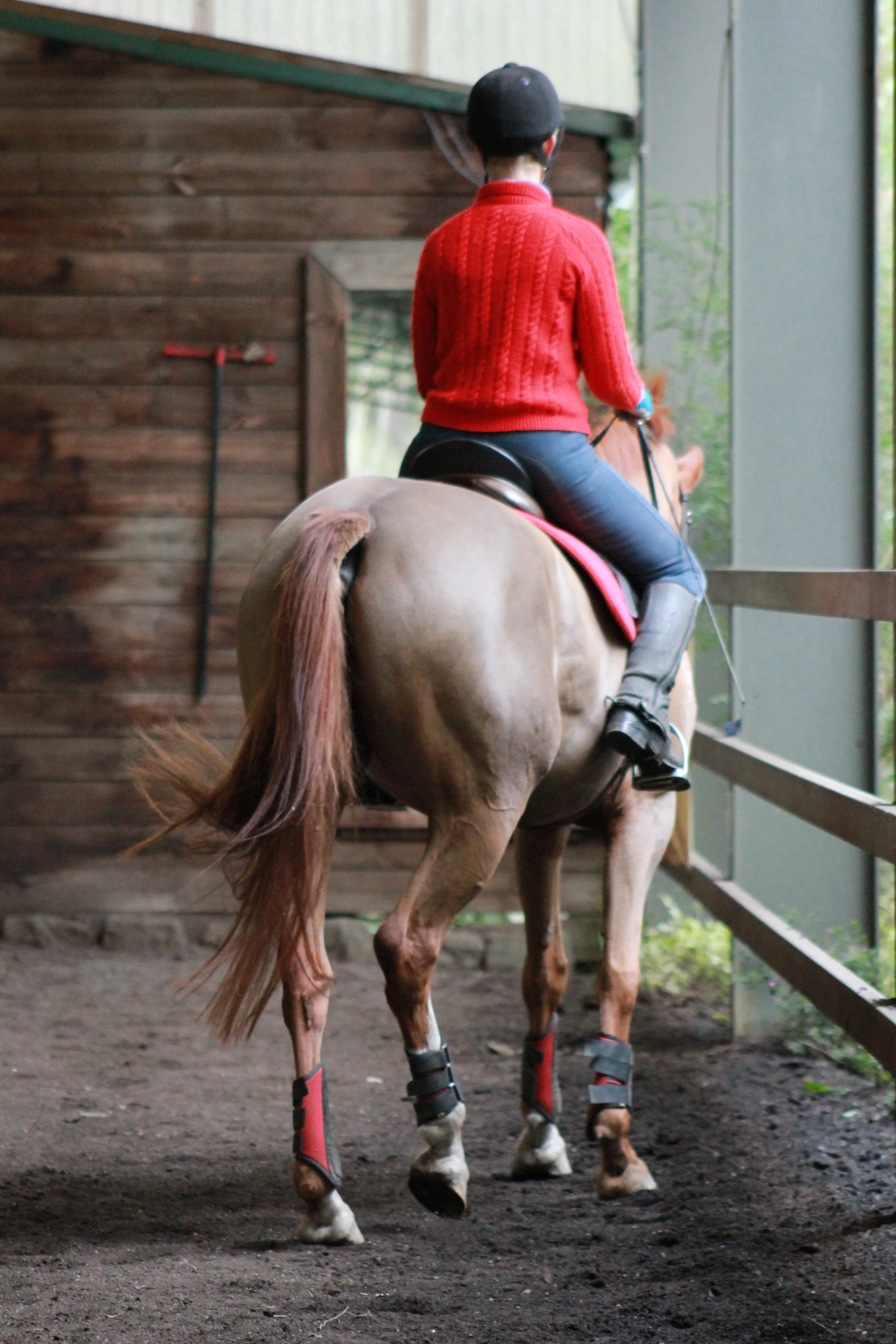
Different Levels, Different Degrees
As horses progress through their training — from young horse to Elementary, Medium, Advanced and beyond — the expectation of being in front of the leg becomes more refined.
Young Horses
* Clear forward reaction.
* Bigger, more obvious response.
* Rider may need a stronger aid initially.
* Focus on straightness and confidence.
Established Horses
* React to lighter, more subtle aids.
* Maintain rhythm without repeated reminders.
* Energy becomes adjustable — not just forward, but compressible and expandable.
Advanced Horses
* Forwardness is a thought, not a kick.
* Energy circulates through the entire body.
* Rider can collect and lengthen with minimal visible aid.
The higher the training level, the more invisible the leg becomes — but the importance never decreases.
In fact, it increases.
Because now the leg doesn’t just say “go”. It says:
* Sit more.
* Engage your hindquarters.
* Step under.
* Carry more weight behind.
That’s where impulsion in dressage truly develops — from the hind leg stepping actively under the body, powered by the rider’s leg aid.
The Feeling of True Forward Energy
There is nothing quite like the feeling of a horse confidently taking you forward.
It feels like:
* The energy is circulating through the entire body.
* The back is soft and swinging.
* The contact becomes elastic.
* The stride feels ground-covering but controlled.
You are not pushing.
You are not holding.
You are being carried.
This is the confidence riders chase for years.
When a horse is truly in front of the leg, you feel safe. You feel supported. You feel like you’re riding the whole body, not just the head and neck.
The horse’s energy flows from hind leg → through the back → into the bridle → through the riders body and back again in a cycle.
That circulation is what creates balance, self-carriage and harmony.
And it starts with the leg.
The Danger of Overusing the Leg
Now, here’s where many riders get it wrong.
They’ve been told “use more leg”.
So they squeeze constantly.
Nag every stride.
Hold their calf tight.
Kick repeatedly.
And slowly, the horse stops listening.
Overuse of the leg creates dullness.
A horse that is constantly pressured by the leg learns to tune it out. The aid becomes background noise.
There’s a brilliant saying:
“Horses that are sensitive to the leg need to learn to travel with leg on, and horses that are slow to respond to the leg need to learn to travel with leg off.”
Let that sink in.
Sensitive horses must learn not to overreact to the leg. They need to accept the rider’s leg resting quietly against their sides without tension.
Slower, lazier horses must learn that the leg means something. That when it is applied, it requires a reaction — and once they react, the leg goes away.
This creates clarity.
The goal is not constant pressure. The goal is clear communication.
Ask.
Expect.
Reward.
Soften.
Then leave them alone.
That is how you maintain responsiveness in horse training.
Leg as a Confidence Builder
The rider’s leg is not just about forward movement. It is about emotional stability.
When a horse spooks or hesitates, a confident leg can say:
“Go forward. I’ve got you.”
When a horse loses balance, the leg can support the body and re-establish rhythm.
When a horse questions something, the leg can provide direction and reassurance.
A passive rider often creates an insecure horse. A clear, consistent leg creates trust.
This is especially important in Australian riding environments where we often deal with open spaces, wind, wildlife and unpredictable conditions. A horse that waits for direction from the rider’s leg is far safer than one making independent decisions.
Practical Training Tips to Improve Leg Effectiveness
If you want to improve your horse’s responsiveness and your own riding effectiveness, consider these:
1. **Test the reaction.**
In walk, apply a light leg aid. If there is no immediate response, follow up with a clearer aid. Then soften completely.
2. **Avoid nagging.**
If your leg is constantly on, it means nothing.
3. **Use transitions.**
Frequent transitions improve responsiveness and engagement.
4. **Reward forward thinking.**
When your horse offers energy, don’t block it.
5. **Separate your aids.**
Practise “leg without hand and hand without leg” consciously.
6. **Work on your own balance.**
An unstable rider grips with the leg unintentionally.
Correct riding position and balance make your leg aids clearer and more independent.
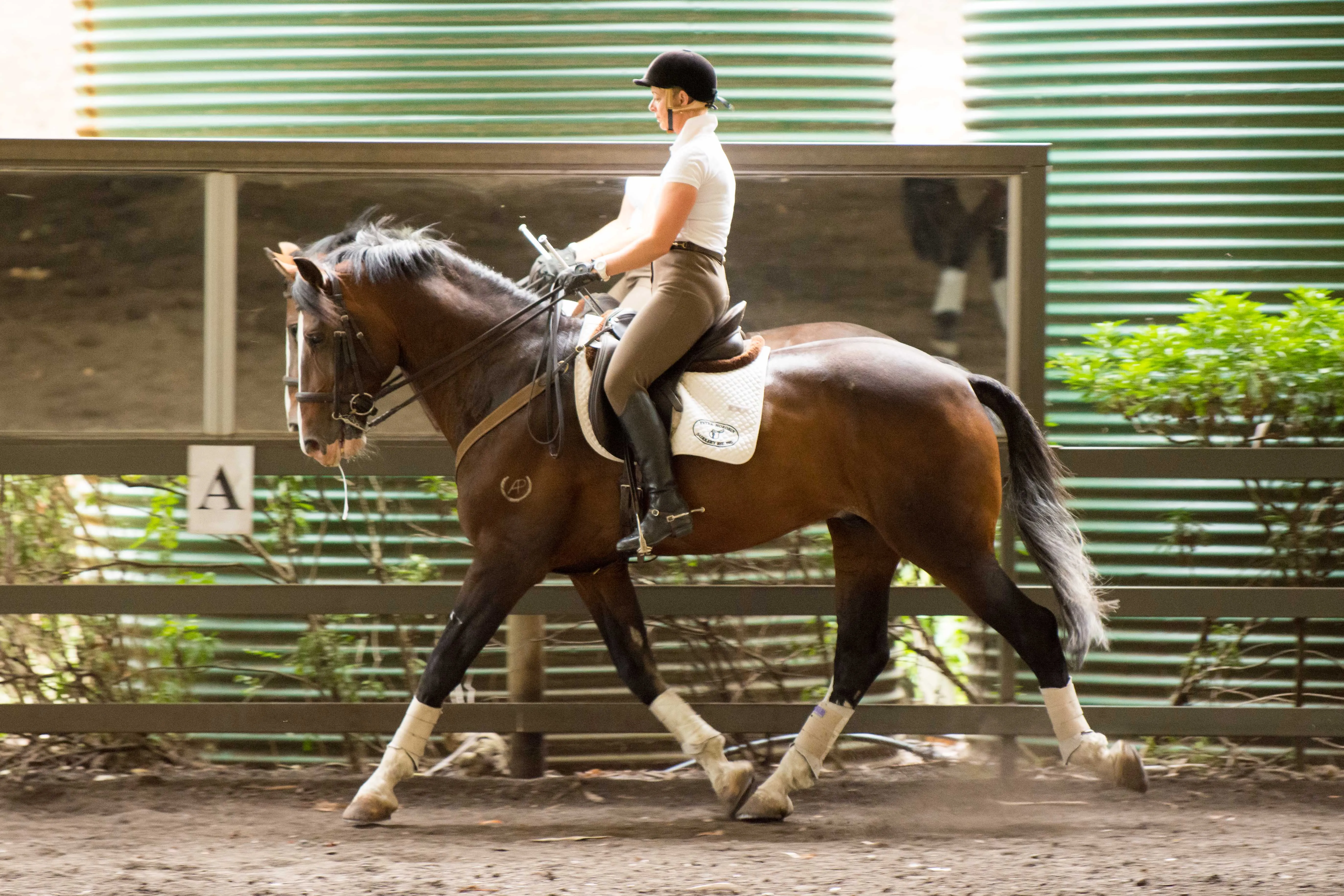
Final Thoughts: The Leg is Leadership
At the end of the day, the rider’s leg represents leadership.
It creates the forward.
It creates the confidence.
It creates the engagement.
It creates the conversation.
Without it, the horse fills the silence.
With it, the horse feels guided, supported and understood.
True horsemanship is not about stronger aids. It’s about clearer ones.
When the energy is flowing, when the horse is confidently in front of the leg, when you feel that beautiful circulation through the body — that’s when riding becomes art.
And it all begins with the leg.
#HorseRiding #DressageTraining #InFrontOfTheLeg #HorseTrainingAustralia #EquestrianEducation #RidingAids #Impulsion #YoungHorseTraining #Horsemanship #RideFromLegToHand #ClassicalDressage #AustralianEquestrian