
The Dressage Whip:
A Tool of Communication
The Dressage Whip: A Tool of Communication
Mar 18, 2026
Let’s get one thing out of the way first — I don’t love the word whip. It carries a lot of baggage, and for many people (myself included), it brings up images that have nothing to do with good horsemanship. Unfortunately, we don’t really have another widely accepted term for it, so here we are.
But when used correctly, a dressage whip is not about punishment, force or dominance. It is simply an extension of the rider’s aids — no different in principle to your leg, your seat or your rein.
Used well, it becomes a quiet, precise and incredibly useful communication tool.
Used poorly… well, that’s where the damage can be done.
So let’s talk about what the correct use of the dressage whip actually looks like in everyday riding, across all levels — from young horses right through to performance horses.
The Whip Is an Extension — Not a Replacement
This is probably the most important concept to understand.
The dressage whip is not there to replace your leg.
It is there to support your leg.
If we start relying on the whip instead of developing a clear, consistent leg aid, we create confusion. The horse no longer understands what the primary aid is, and we lose clarity in our communication.
Your leg should always come first.
The sequence is simple:
1. Ask with the leg
2. Wait for a response
3. If there is no response, back it up with the whip
And here’s the key — the whip is not used in isolation. It is always tied directly to the leg aid. The timing matters.
When the horse learns that ignoring the leg will result in a quick, clear follow-up from the whip, something interesting happens…
They start to respect the leg.
And that’s exactly what we want — a horse that is responsive, forward-thinking and light to ride.
Timing and Placement Matter
If you’re going to carry a whip, it needs to be used correctly — otherwise it becomes meaningless or worse, unfair.
The whip should be applied directly behind the rider’s leg.
This is important because it reinforces the same message as the leg:
> “Move forward” or “yield away from this pressure.”
If the whip is used randomly — on the shoulder, on the neck, or delayed after the leg — the horse can’t connect the dots. That’s when confusion creeps in.
Think of it like this:
* The leg asks the question
* The whip aids in clarifying the answer
Quick, respectful and clear.
No nagging. No repeated tapping. No frustration.
Respect Always Comes First
No matter what discipline you ride — dressage, eventing, racing, trail riding — the foundation is the same:
Respect for the horse.
The whip should never be used out of anger, frustration or impatience.
Horses don’t learn from emotion. They learn from timing, consistency, and clarity.
If we lose our cool and start using the whip as a reaction, we’re not training — we’re just creating tension and in many cases, fear.
A well-used whip is:
* Quiet
* Precise
* Fair
* Predictable
And most importantly, it should not be applied more than once when used in a timely manner.
Because once the horse understands the system, the leg becomes enough.
How to Carry the Whip Correctly
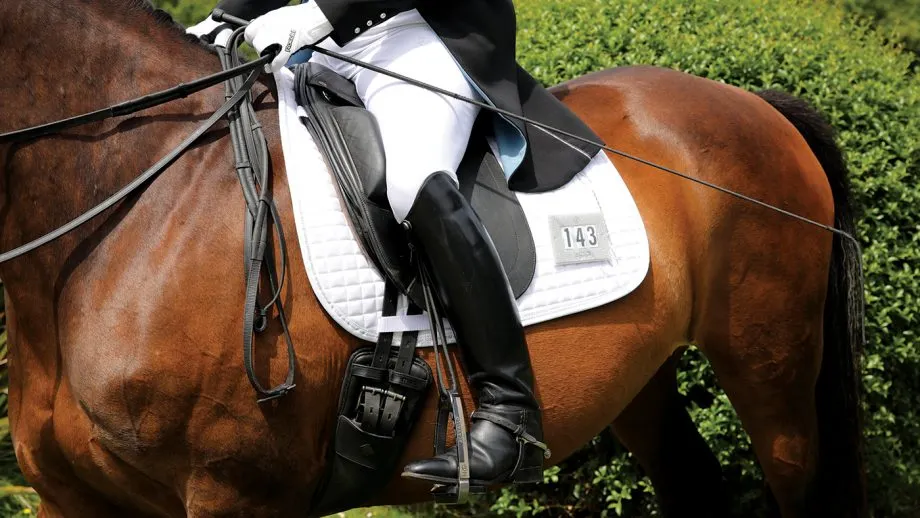
There’s a practical side to this as well — how you actually carry the whip.
It should sit comfortably in your hand, with no tension or gripping.
The whip should:
* Rest lightly along your thigh
* Be balanced and easy to move
* Not interfere with your rein contact
You should be able to carry it in either hand, but generally:
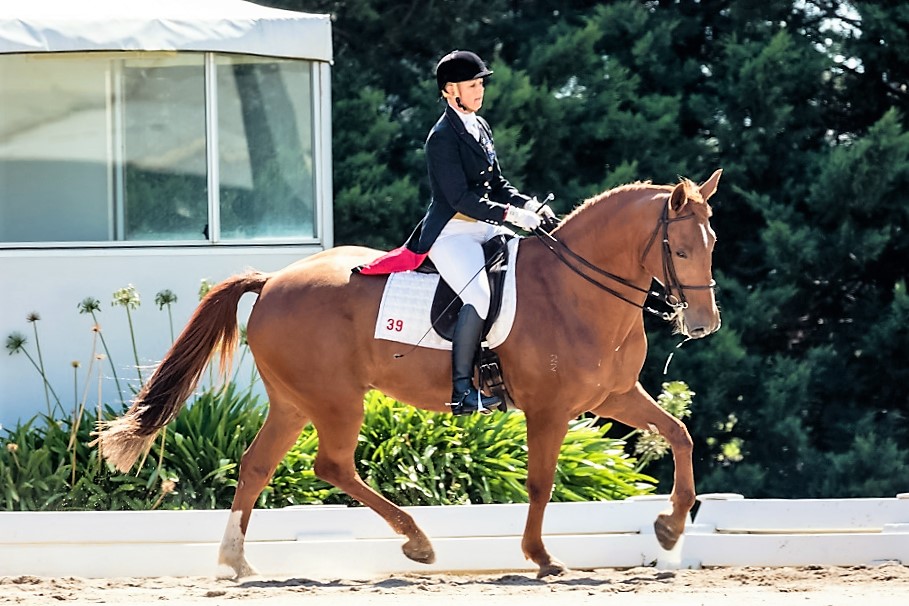
* In a dressage arena, it’s most commonly carried in the inside hand
Why? Because it allows for easier, more direct use behind the inside leg — particularly when working on bend, lateral work and engagement.
That said, riders should be comfortable switching hands when needed. Being one-sided with the whip is no different to being one-sided with your riding — it limits you.
“I Don’t Ride With a Whip” — And That’s Okay
There are plenty of riders who choose not to carry a whip.
And that’s absolutely fine.
A good rider should always aim to develop independent, effective aids without relying on equipment.
But here’s something worth remembering:
It’s not the whip itself that causes concern for horses.
It’s the hand that holds it.
A horse that has had a bad experience doesn’t fear the object — it fears the association.
So avoiding the whip entirely doesn’t necessarily solve the problem. In some cases, it can actually mean we’re avoiding an opportunity to educate and build confidence.
Helping Horses That Are Anxious About the Whip
Some horses come with history.
They might be reactive, tense or even frightened when they see or feel a whip.
And this is where our responsibility as trainers really comes into play.
Because whether we like it or not:
If you own and ride a horse, you are a trainer.
For these horses, the whip must be introduced (or reintroduced) with care and thought.
That might look like:
* Carrying the whip without using it
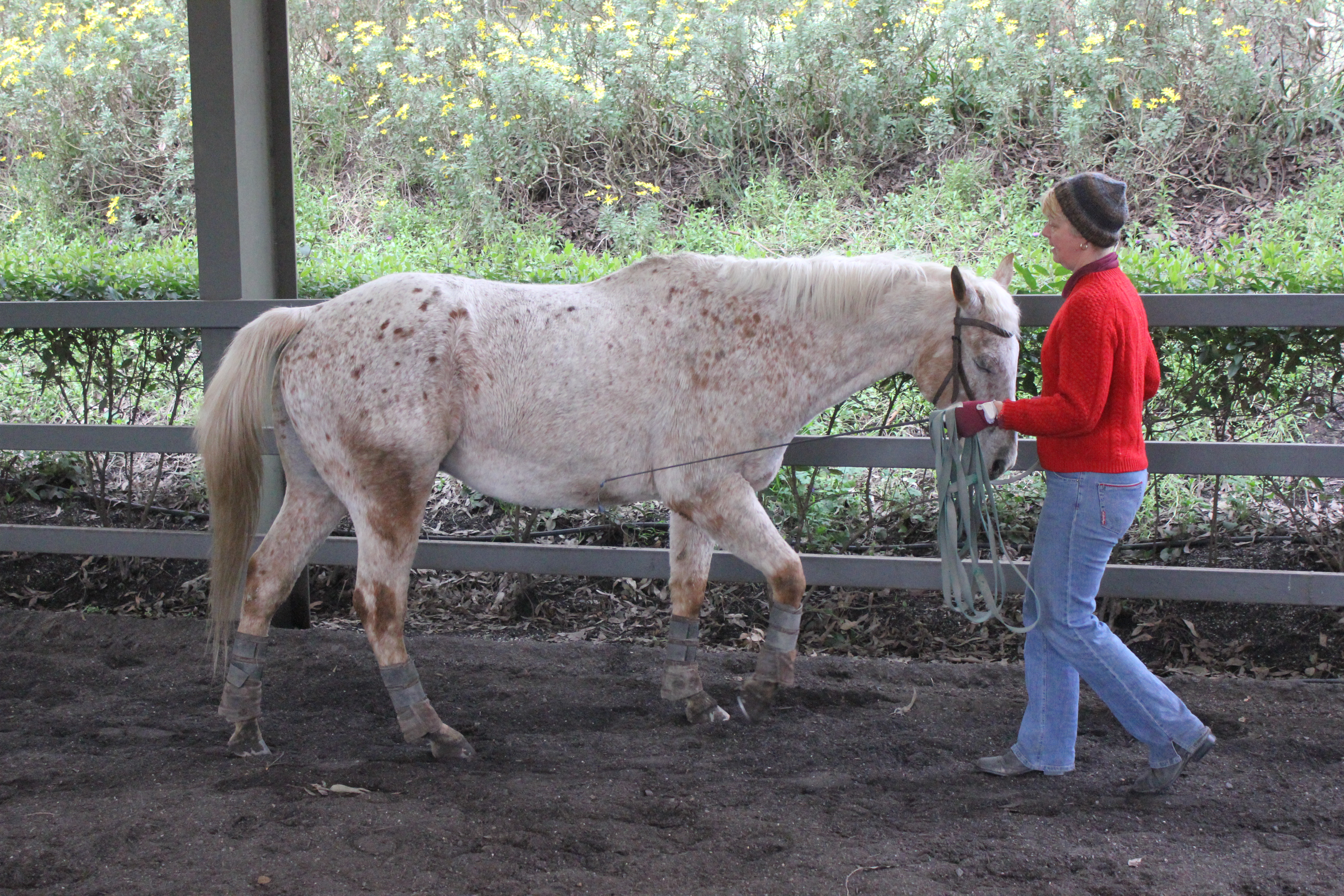
* Letting the horse see and feel it quietly from the ground
* Rewarding calm behaviour around it
* Gradually building up to light, well-timed use under saddle
The goal is not just tolerance — it’s confidence.
We want the horse to understand that the whip is not something to fear, but simply another part of clear communication.
Using the Whip on the Shoulder
While the whip is most commonly used behind the leg, there are times when it can be used on the shoulder.
This is typically to influence the direction of the front leg.
For example:
* When a horse is falling in through the shoulder
* When you need to redirect the forehand
* When refining straightness or alignment
Again, the same principles apply:
* Clear intention
* Correct timing
* Light, precise application
It’s not about hitting or forcing — it’s about guiding.
Developing Responsiveness, Not Dependence
One of the biggest mistakes riders make is overusing the whip.
If you find yourself constantly needing it, it’s usually a sign that something else is missing:
* The leg aid isn’t clear
* The timing is off
* The horse doesn’t understand the expectation
The goal is always to create a horse that is:
* Forward off the leg
* Responsive to light aids
* Mentally relaxed
The whip is simply a tool to help establish that understanding — not something the horse should depend on.
The Bigger Picture: Communication and Clarity
At the end of the day, good riding is about communication.
Not force. Not control. Not dominance.
Communication.
The dressage whip, when used correctly, helps refine that communication. It gives us:
* Precision
* Timing
* Consistency
But it only works when it’s part of a bigger system — one that includes:
* A balanced rider
* Clear leg aids
* Thoughtful training progression
Without those pieces, the whip becomes meaningless.
Final Thoughts
It’s easy to see why the word “whip” makes people uncomfortable.
But the tool itself isn’t the problem.
It’s how it’s used.
When approached with understanding and respect, the dressage whip becomes:
* A quiet aid
* A fair reinforcement
* A bridge between confusion and clarity
It should never be something we rely on heavily.
Instead, it should sit quietly in the background — ready when needed, but rarely required.
Because when training is done well, the horse doesn’t need reminders.
They understand.
And that’s always the goal.
#AvocaParkEquestrian #HelpingPeopleLiveTheirLoveOfHorses #DressageInLightnessOnline
#HorseTraining #DressageBasics #HorseRidingAustralia #SoftHorsemanship #TrainTheHorse #RiderEducation #HorseCommunication #DressageTraining #HorseWelfare #BetterRiding #EquestrianAustralia